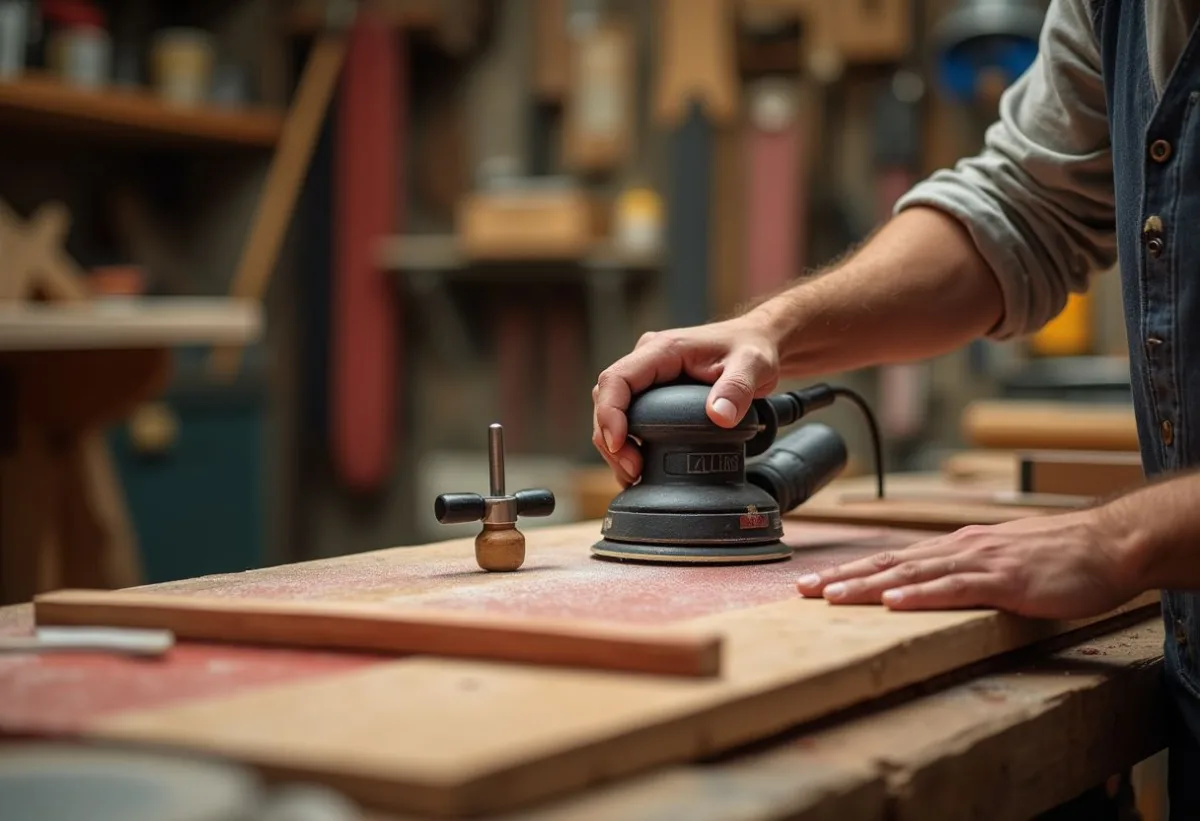
Craftsmanship and industry have always shared a unique love for well-done work, which requires tools that are both precise and effective. Among these tools, one of the most significant innovations is the abrasive belt. Often unknown to the general public, it is nonetheless a central element in many activities, ranging from woodworking to industrial manufacturing. Its role is often underestimated, even though it is a fundamental pillar in the process of sanding and finishing various surfaces.
Understanding the composition of an abrasive belt
To grasp the essence of the abrasive belt, it is essential to look into its constituent materials and their assembly. Each component plays a determining role in its performance.
- Backing: The backing of an abrasive belt is often made of paper, fabric, or a combination of both. This backing must be durable enough to withstand the forces exerted during sanding.
- Abrasive material: Generally, this consists of aluminum oxide, silicon carbide, or other hard compounds. These grains are responsible for the effective abrasion of the surfaces being worked on.
- Bonding agent: The abrasive grains are glued to the backing using a bonding agent, often a synthetic resin, which ensures the durability of the whole.
Diverse and versatile applications
The abrasive belt shines with its ability to adapt to a variety of uses. Its application universe is vast, going well beyond simple wood sanding.
In the industrial sector, it is a preferred ally for polishing metals, cutting composite materials, and even deburring automotive parts. Artisan workshops adopt it for the delicate sanding of wooden sculptures, while weekend DIYers appreciate it for renovating various household items.
The abrasive belt adapts infinitely, finding its place in every corner of our daily lives where smoothing or finishing is necessary.
Choosing the appropriate abrasive belt
Each project and material requires a specific type of abrasive belt. Making the right choice is crucial to achieving the desired results.
First, one must assess the grit size, which determines the fineness or strength of the abrasion. Coarse grit belts are ideal for roughing, while fine grit ones are perfect for a careful finish.
Next, the type of abrasive material must be suitable for the surface to be treated. For example, silicon carbide is particularly effective on glass and ceramics, while aluminum oxide is preferable for wood and metal.
Finally, the size and shape of the belt must match the belt sander being used.
Maintenance and longevity of abrasive belts
Like any tool, the abrasive belt requires meticulous maintenance to ensure its longevity and optimal performance.
To extend the lifespan of these belts, it is advisable to clean them regularly to remove dust and debris that accumulate between the abrasive grains. This can be done using specific cleaning sticks.
Storing them in a dry place and away from extreme temperatures also prevents the deterioration of the bonding agent that holds the grains in place.
Frequent inspection allows for the detection of signs of premature wear, ensuring that the abrasive belt does not cause damage to the materials being finished.