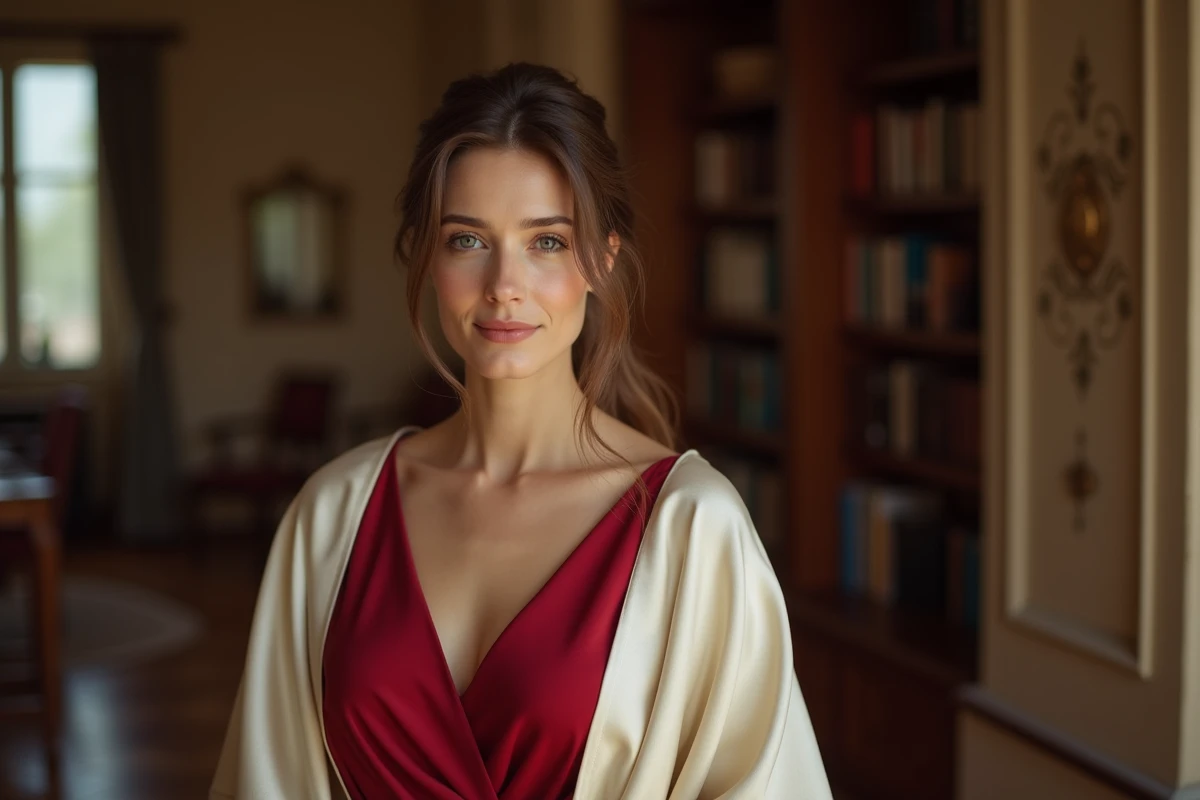
Red is a saturated color whose undertone (orange, blue, burgundy) dictates all possible associations. Choosing a shawl for a red dress without identifying this undertone is like tuning an instrument by ear in a noisy room. We assume here that you have mastered the basics of accessorizing and are looking for operational selection criteria, not a list of colors “that go well with red.”
Event Constraints: The Real Specifications for a Shawl with a Red Dress
The theory of colors is useless if the shawl slips every twenty minutes, if it is too warm during an outdoor cocktail, or if it creates an awkward flat area in group photos. We recommend starting from the actual constraints of the event before thinking about shades.
Temperature and duration dictate the weight. A religious ceremony followed by a dinner in an air-conditioned room requires two levels of coverage. A lightweight and breathable silk chiffon shawl is suitable for covering the shoulders in a place of worship without causing thermal discomfort at dinner. On the other hand, an outdoor evening extending beyond 10 PM requires a cashmere-silk blend pashmina, whose density effectively protects against the cold without overwhelming the silhouette.
Movement also matters. If you move from the entrance of a church to a car, then to a garden, the shawl must be able to be tied quickly or worn as a cape without needing a brooch. Models that are too narrow (less than 60 cm wide) tend to slip during arm movements. Opt for a width of at least 70 cm for a natural hold on the shoulders.
For events where a religious dress code requires covering the shoulders, the material must be opaque. Chiffon alone is not always sufficient: a twill weave or silk crepe offers the required coverage while remaining fluid. You will find tips for choosing a red shawl on Blog Too that detail these distinctions by context.
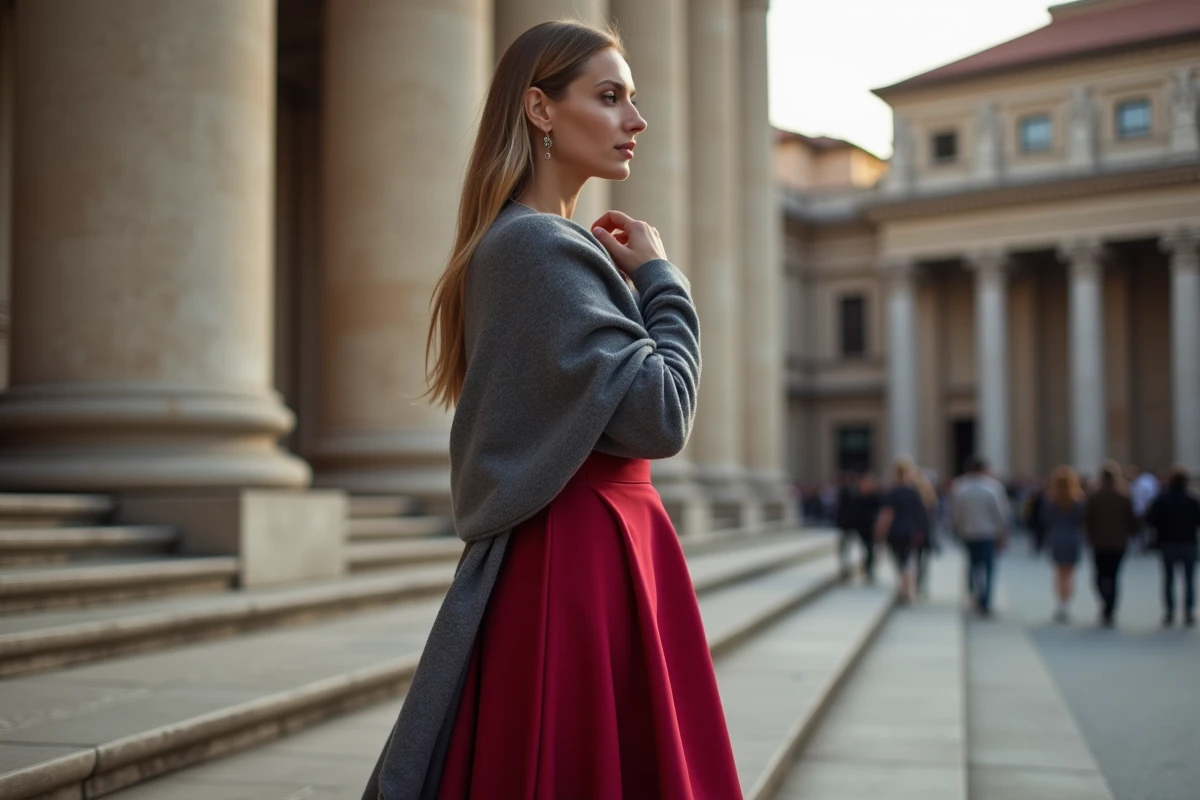
Undertone of the Red Dress and Shawl Color Choice
The seasonal method, derived from color diagnosis, directly applies to the dress-shawl duo. We use it here in a simplified manner.
Orange Red or Tomato Red
This warm undertone calls for shawls in the same thermal family. A matte gold, champagne, or rosy nude works without creating a visual break. Black, often chosen by default, abruptly cools a warm red and produces a harsh contrast, especially in flash photography.
Blue Red or Cherry Red
A cool red naturally pairs with silver, pearl gray, or navy blue. Yellow gold, on the other hand, creates a visible chromatic temperature conflict. If you prefer a warm metal, opt for rose gold, which shares the rosy component of cherry red.
Burgundy Red or Dark Red
Deep tones better support dark shawls. A fir green, plum, or duck blue create sophisticated associations. Light beige also works, provided the material is dense enough not to appear washed out next to an intense burgundy.
- Warm Red (tomato, poppy): gold shawl, champagne, nude, ivory – avoid pure black and cool silver
- Cool Red (cherry, raspberry): silver shawl, pearl gray, navy blue, rose gold – avoid yellow gold
- Deep Red (burgundy, garnet): fir green shawl, plum, duck blue, dense beige – avoid overly light pastels
Shawl Materials and Photographic Rendering on a Red Dress
Red reflects light aggressively, especially under artificial lighting. The choice of shawl material directly alters the rendering in photos, a parameter that most guides overlook.
Satin silk creates reflections that compete with red. In flash photos, a light satin shawl produces overexposed areas on the shoulders, drawing the eye away from the face. Silk chiffon, matte and transparent, poses fewer problems as it does not catch light in the same way.
Cashmere and wool-silk blends absorb light. They create a neutral area around the face, helping photographers balance exposure. For a wedding where photos are an expected deliverable, we recommend a matte material rather than a shiny one, regardless of the chosen color.
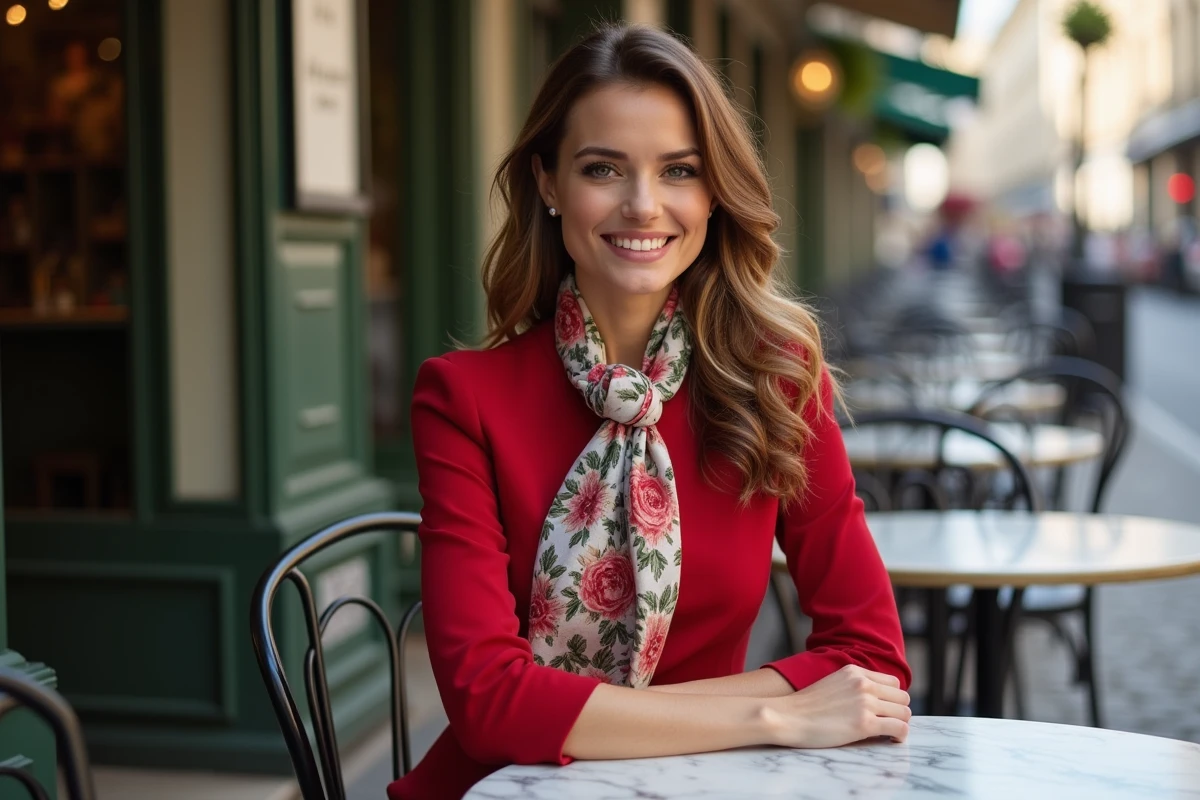
A technical point often overlooked: the fabric of the shawl should not catch on that of the dress. A red dress in crepe or jersey catches raw wool fibers. Prefer a fine weave pashmina or a lined shawl if you are wearing a dress in a textured material.
Tying and Draping a Shawl on a Red Dress: Technical Gestures
The draping modifies the visible proportion of red, thus the overall impact of the outfit. Three approaches produce very different results.
- Laid over the shoulders, free ends in front: red remains dominant, the shawl frames the face. Suitable for dresses with a round or boat neckline. Requires a shawl of at least 180 cm long for the ends to fall gracefully
- Tied once in front, asymmetrical ends: reduces the visible area of red and structures the silhouette. Works well with fluid dresses or empire cuts. The knot should remain loose to avoid the “neck scarf” effect
- Wrapped as a cape, held by a discreet brooch: broadly covers the shoulders and upper back. A suitable solution for religious ceremonies and cool evenings. The brooch should be positioned under the collarbone, not at the center of the sternum, to avoid visually weighing down the bust
On a red dress, every centimeter of visible shawl alters the chromatic balance of the outfit. Testing the drape in front of a full-length mirror, under lighting similar to that of the event, remains the only reliable way to validate the final rendering before heading out.