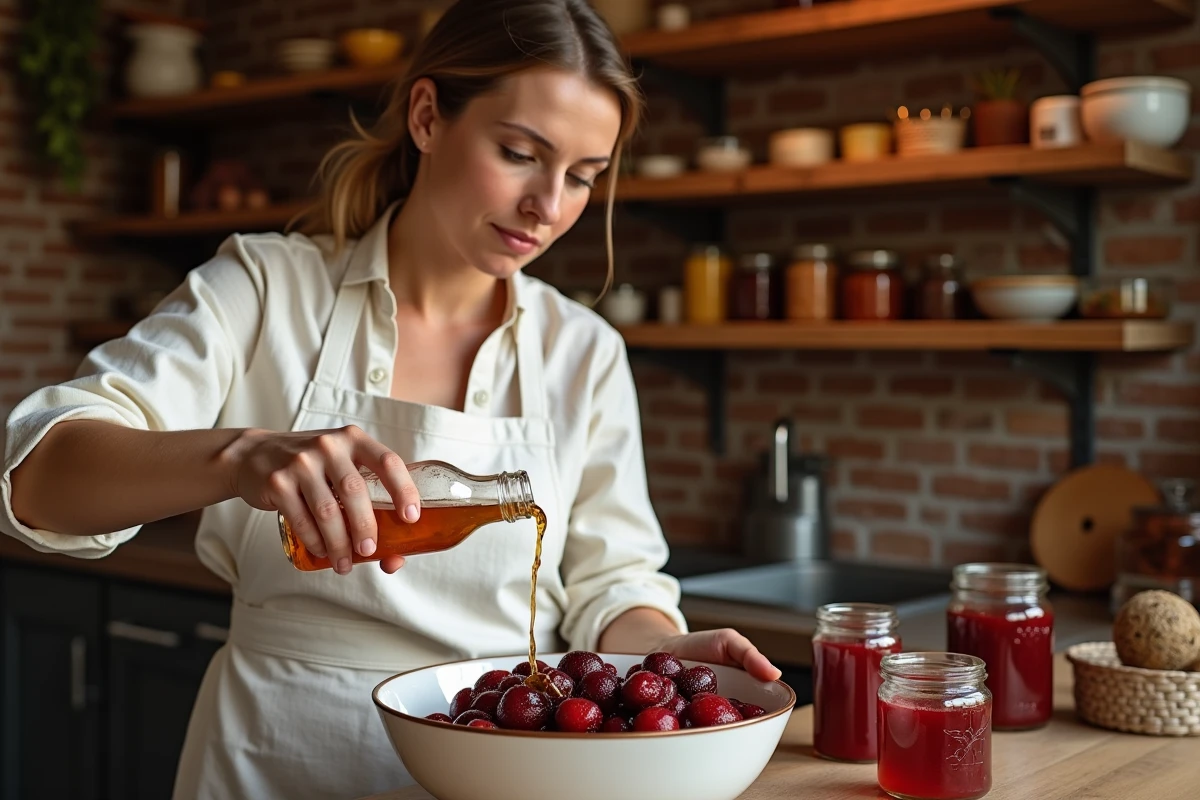
When preparing limoncello, cherries in brandy, or a nut liqueur, the recipe often calls for a neutral alcohol with an alcohol content of around 90 degrees. The reference product in supermarkets, the 90-degree fruit alcohol sold at Leclerc, is becoming increasingly difficult to find on the shelves.
The question of replacement is not limited to choosing another bottle: the alcohol content affects the extraction of flavors, preservation, and the final taste of the preparation.
What the alcohol content really changes in a fruit maceration
Before looking for a substitute, it’s important to understand why traditional recipes require such a strong alcohol. A 90-degree alcohol is not just a powerful solvent for extracting essential oils from lemon zest or the color from red fruits. It also acts as a preservative that prevents any unwanted fermentation.
With an alcohol content between 37.5 and 45 degrees (vodka, white rum), the extraction is slower and less complete. Liposoluble aromatic molecules, those that give intensity to citrus zest for example, dissolve better in a medium that is highly concentrated in ethanol.
The other direct consequence concerns preservation. A preparation made with 40-degree alcohol contains more water. This water encourages microbial growth if the bottle is stored at room temperature for several months. Reducing the alcohol content requires refrigeration or faster consumption.
If you are looking to replace the 90-degree fruit alcohol from Leclerc in your preparations, this dual function (extraction and preservation) should guide your choice of substitute.
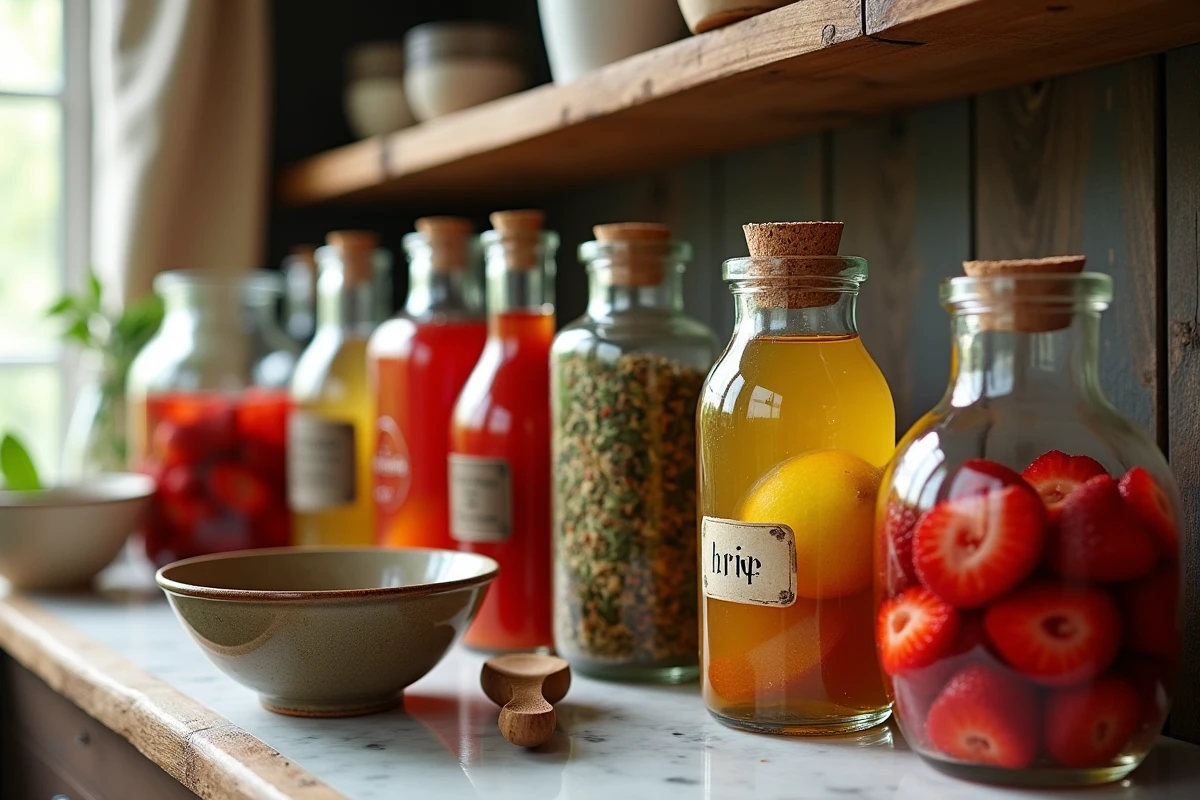
Vodka, white rum, or fruit brandy: comparison for your homemade liqueurs
You may have noticed that some forums recommend vodka, others white rum, and still others a fruit brandy? Each option alters the result in a different way.
Neutral vodka at 40 degrees
This is the closest substitute in terms of taste neutrality. A standard vodka adds almost no inherent aroma, allowing the fruits to shine. For limoncello, it is the most coherent choice among common supermarket spirits.
The downside: the extraction of lemon zest takes longer than with 90-degree alcohol. Expect a significantly longer maceration time to achieve comparable intensity. The sugar syrup added later must also be measured differently, as the proportion of water in the final mixture is already higher.
Agricultural or industrial white rum
White rum adds a note of cane that pairs well with tropical fruits (pineapple, mango, passion fruit) but can distort a limoncello or pear liqueur. Its alcohol content, often around 40 to 55 degrees depending on the brand, offers a bit more extraction power than standard vodka.
Fruit brandy at 40-45 degrees
A plum or pear brandy adds an additional aromatic layer. It is suitable when you want to enhance an already present fruity profile. For cherries in brandy, using cherry brandy (kirsch) gives a more distinctive result than a neutral alcohol.
- Neutral vodka: ideal for recipes where the fruit should dominate (limoncello, raspberry liqueur, red fruits in alcohol).
- White rum: suitable for macerations of exotic fruits or spiced preparations (vanilla, cinnamon).
- Fruit brandy: relevant when you want to double the aromatic identity of the base fruit.
- Strong neutral alcohol online: for those who want to find a product close to the original, agricultural spirits at 96 degrees labeled for food use are available on specialized liqueur ingredient sites or in oenology shops.
Food-grade neutral alcohol online: finding an equivalent to 90 degrees
High-concentration food-grade ethyl alcohol has not disappeared from the market. It has simply migrated from large retail to specialized channels. Websites dedicated to liqueur ingredients, some oenology shops, and, under certain conditions, pharmacies continue to offer neutral agricultural alcohols with an alcohol content of around 96 degrees.
Before purchasing, one verification point not to overlook: the label must clearly state “food-grade”. An ethyl alcohol sold as a disinfectant or solvent contains denaturants that make it unsuitable for consumption. Confusion is common, especially in pharmacies where both types sometimes coexist on the same shelf.
The price per liter is higher than the former 90-degree fruit alcohol in supermarkets. The advantage is that a liter of 96-degree alcohol, once diluted with sugar syrup and fruit juice, produces a final volume of liqueur that is much greater than a liter of vodka used as is.
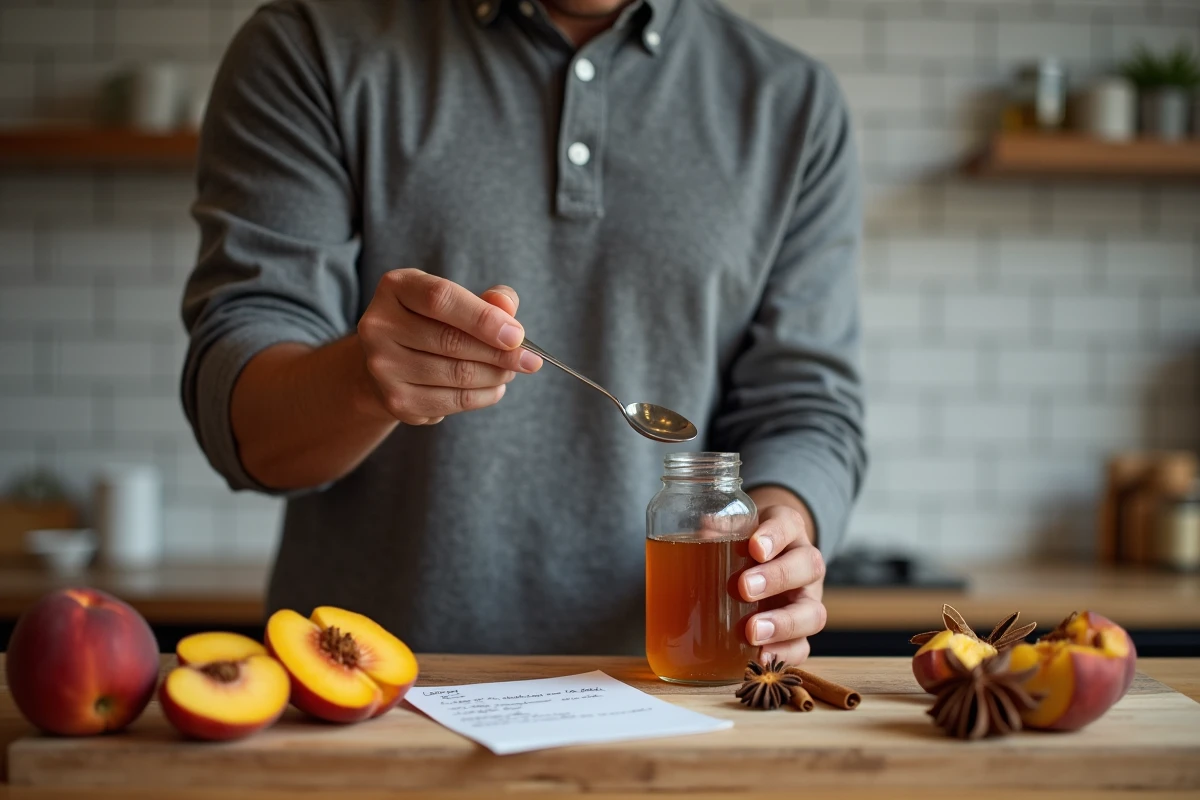
Adjusting maceration time and syrup dosage according to the chosen alcohol content
Switching from 90-degree alcohol to 40-degree alcohol is not just a matter of exchanging one bottle for another. Two parameters need to be adjusted in the recipe.
The first is the maceration time, which must be extended with a less concentrated alcohol. The lemon zest in 40-degree vodka releases its oils more slowly than in 90-degree alcohol. Where a classic limoncello recipe calls for a few days of maceration with strong alcohol, the duration must be significantly extended with vodka.
The second parameter is the syrup. With 90-degree alcohol, a syrup of water and sugar is added that also serves to dilute the mixture to the desired degree (around 30-35 degrees for limoncello). With vodka already at 40 degrees, adding the same amount of syrup would lower the final degree too much and result in a weak and overly sweet liqueur. Reduce the syrup proportion by about one third to compensate.
Whole fruits (cherries, mirabelles) pose an additional problem: their natural water further dilutes the alcohol during maceration. With a starting alcohol of 40 degrees, the final result can drop below 20 degrees, a threshold where long-term preservation without refrigeration becomes risky.
Replacing the 90-degree fruit alcohol in your homemade recipes therefore requires a comprehensive adjustment, not just a simple bottle exchange. The alcohol content chosen determines the maceration duration, the syrup quantity, and the preservation method. A neutral alcohol ordered online remains the solution most faithful to the original recipe, but a well-used vodka yields quite satisfactory results, provided you are willing to modify your dosing habits.