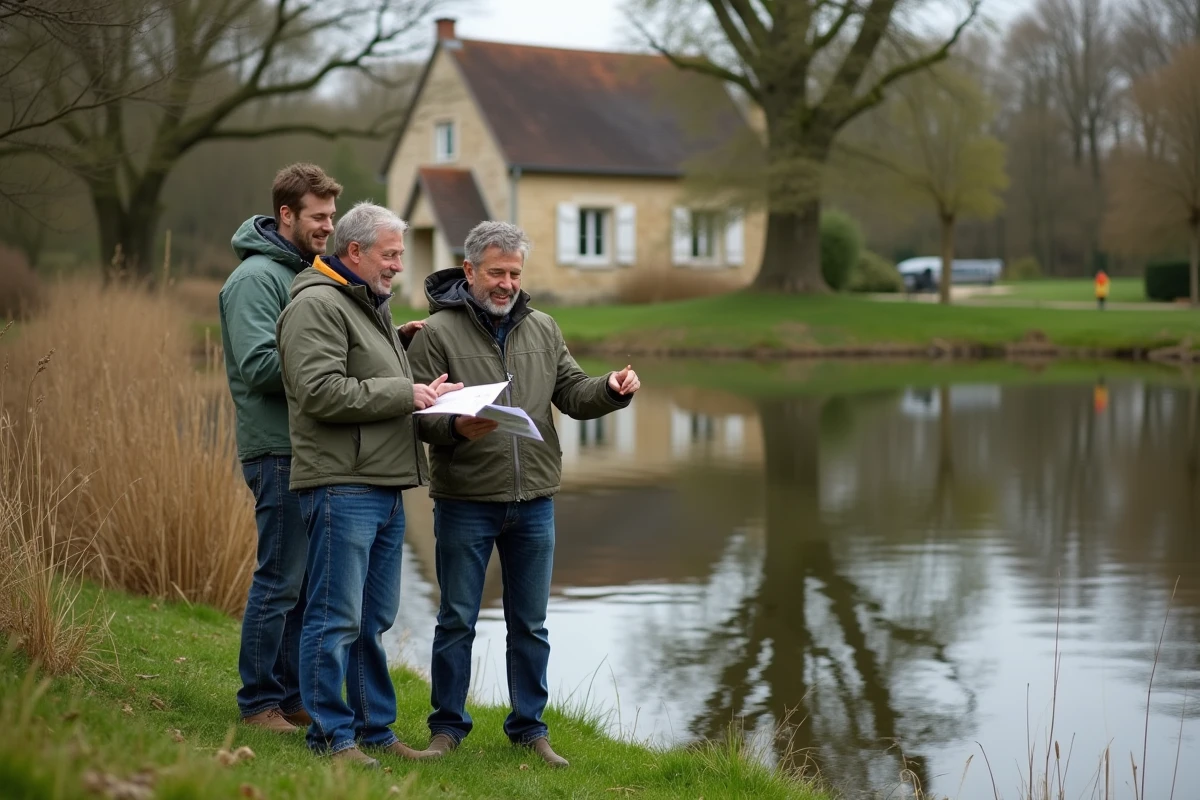
Buying a pond with others is often an extension of a shared passion for fishing, nature, or simply the tranquility of a body of water. The project is appealing because it divides the acquisition price and maintenance costs. However, the co-ownership of a pond does not operate like that of an apartment: the rules of the Civil Code on undivided ownership apply by default, and environmental obligations weigh on each co-owner.
Pond co-ownership agreement: the document that no one writes early enough
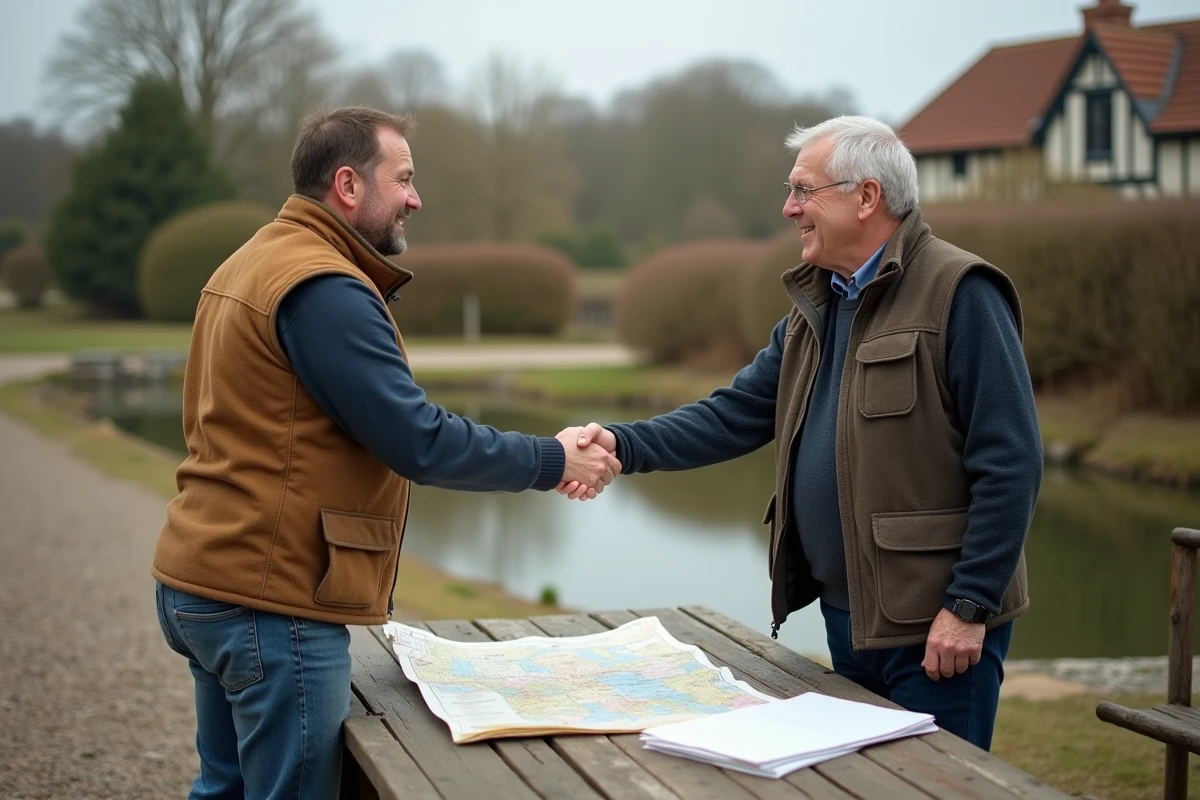
Before even signing with the notary, an agreement between buyers must be drafted. This document sets out the distribution of shares, the voting rules for day-to-day decisions, and the exit procedures for a co-owner. Without this agreement, the legal regime of undivided ownership applies, with a formidable principle: any co-owner can request a division at any time.
In practical terms, this means that a dissatisfied or financially troubled co-owner can force the sale of the property. The agreement allows for locking in this situation by providing a right of preemption among partners and a reasonable notice period.
You can learn more on H Immobilier about the steps to structure this type of collective arrangement.
The agreement must also specify who manages relations with the administration. The DDT (Departmental Directorate of Territories) considers all co-owners to be jointly responsible for the good condition of the hydraulic structure. Designating a single point of contact simplifies every administrative process.
Water law and shared responsibility: what changes when the pond has multiple owners
A pond is not just any piece of land. It is subject to water law, managed by the DREAL or DDT depending on the departments. When the body of water belongs to a single person, the point of contact is clear. In co-ownership, the situation becomes more complicated.
Why does this point deserve your attention? Because compliance obligations apply to the structure as a whole: condition of the dam, drainage system, flood spillway. If an inspection reveals a defect, the administration addresses all co-owners. Each is jointly responsible for compliance work, even if one only uses the pond two weekends a year.
To avoid conflicts, the agreement should provide a key for distributing structural work expenses. Two common options:
- Distribution proportional to shares, reflecting the patrimonial value held by each
- Equal distribution among co-owners, simpler but sometimes perceived as unfair if the shares are unequal
- Creation of a reserve fund funded by quarterly calls, modeled after a traditional property management company
The third option is the most protective. A reserve fund avoids the need to gather a large sum urgently after a weather event.
Pond insurance in co-ownership: a contract to negotiate collectively
After recent drought episodes, insurers have reassessed the risk associated with private bodies of water. The pond can cause damage in the event of a dam failure or downstream flooding. For a single owner, civil liability is often sufficient. In co-ownership, the situation requires a tailored contract.
Collective or individual civil liability
The safest approach is to take out a single civil liability contract in the name of the co-ownership. Each co-owner contributes to the premium. With individual contracts, the risk of a coverage gap arises if a partner lets their insurance expire.
Guarantee for hydraulic structures
The dam, the sluice (drainage device), and the spillway represent the vulnerability points of a pond. Their repair can reach significant amounts. Ensure that the contract covers damages caused to third parties downstream, not just damages to the body of water itself.

Renaturation aids: a financial lever for pond co-owners
For several years, certain Water Agencies (notably Loire-Bretagne and Rhône-Méditerranée) have offered financial assistance to groups of pond owners who commit to renaturation work. Lowering dams, creating wetlands, restoring spawning grounds: these projects are better funded when they cover a coherent portion of a watershed.
For a pond co-ownership, this is a direct advantage. An isolated owner will find it more challenging to obtain these funds than a structured collective carrying a project at the territorial scale. Joint management facilitates access to grants from Water Agencies.
However, this requires that the co-ownership agreement allows a designated co-owner to submit grant applications and initiate work after a favorable vote.
Exiting co-ownership and reselling pond shares: anticipate from the start
A collective purchase can last for years without issue, until the day a co-owner wants to leave. Two mechanisms protect the group:
- The internal right of preemption, which allows remaining co-owners to buy out the exiting member’s share before it is offered to a third party
- An approval clause, which subjects the entry of any new buyer to the group’s agreement
- A pre-defined valuation method (expertise by a rural notary, for example), to avoid disagreements over the share price
Without these clauses, anyone can sell their share to a stranger. The group then loses control over the composition of the co-ownership. Setting exit rules protects as much as setting rules for communal living.
Buying a pond with others remains an accessible and rewarding project, provided that the legal framework is treated with the same care as the choice of the body of water. A solid agreement, a collective insurance contract, and a reserve fund for works form the foundation of a lasting co-ownership.