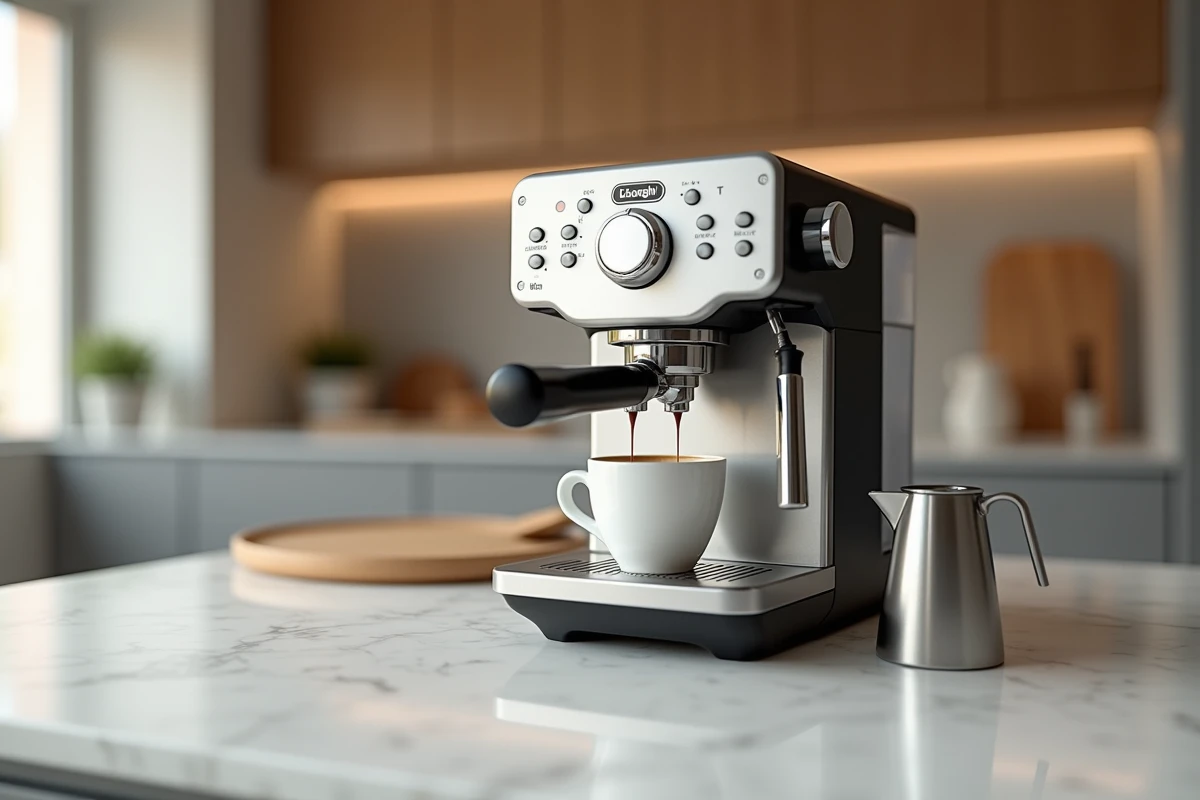
The DeLonghi Magnifica S produces a decent espresso right from the first use. However, achieving a balanced cappuccino with this machine requires some adjustments that the manual does not always explain clearly. Grind, milk temperature, assembly order: each parameter measurably alters the cup result.
Grind Adjustment on the Magnifica S: The Setting Most Users Overlook
The grinder of the Magnifica S is adjusted via a dial located under the lid of the bean container. This setting should only be changed while grinding, never when stopped, to avoid damaging the blades.
A common issue reported by specialized DeLonghi technicians concerns the grinder adjustment dial not properly clipped onto its axis. The result: a very light, watery coffee that produces a bland cappuccino even with well-frothed milk. The actual grind no longer corresponds to the displayed setting.
To check, remove the bean container and see if the dial turns freely without clicking between positions. If so, reposition it firmly on the notched axis until you feel a clear click. This simple action corrects most problems of overly light coffee in the Magnifica S range.
For an espresso base suitable for cappuccino, set the dial to a fine to medium-fine notch. A roast that is too light will yield an acidic espresso that does not pair well with milk. Opt for a medium roast coffee bean, which is rounder in the mouth once mixed with the foam.

Those who wish to make a cappuccino with the DeLonghi Magnifica S from scratch will save time by checking this mechanical point before any other adjustments.
Steam Wand of the Magnifica S: Milk Frothing Technique and Common Mistakes
The Magnifica S ECAM 22.110 features a manual steam wand, known as “classic.” Unlike the automatic carafe systems of higher ranges (Dinamica, Magnifica Evo), it requires precise positioning of the pitcher to produce quality foam.
Pitcher Positioning and Wand Angle
Submerge the steam wand just below the surface of the milk, about one centimeter. Slightly tilt the pitcher to create a vortex motion. This whirlpool incorporates air evenly and avoids large bubbles.
- Cold whole milk (straight from the refrigerator): its fat content stabilizes the foam and provides a creamy texture that skim milk cannot replicate
- Stainless steel pitcher: metal conducts heat and allows you to feel the temperature rise with your palm, a more reliable indicator than a thermometer for beginners
- Systematic purging of the wand before and after each use: a few seconds of steam without milk eliminate dried milk residues that gradually clog the outlet
The ideal foam for a cappuccino is dense, micro-textured, with no visible bubbles on the surface. If you get very airy foam, like “shaving foam,” the wand was too high in the milk. If the milk heats without frothing, it was too deep.
Temperature and Volume
Stop the steam when the pitcher becomes too hot to comfortably hold your hand on it. Beyond this threshold, the milk proteins denature, the foam collapses, and a burnt taste appears.
Plan for about double the final desired volume in cold milk, as the foam increases the volume. For a classic cappuccino, this means filling the bottom of the pitcher to one-third.
Assembling the Cappuccino and Proportions to Follow
The traditional cappuccino relies on a balance of three parts: espresso, hot milk, milk foam. The Magnifica S does not automatically dose these proportions for manual milk drinks.
| Component | Target Proportion | Magnifica S Setting |
|---|---|---|
| Espresso | One third of the cup | Short dose button, fine grind dial |
| Hot liquid milk | One third of the cup | Lower part of the pitcher after frothing |
| Milk foam | Upper third | Top layer of the pitcher, spooned or poured |
First, pour the espresso into a preheated cup. The preheating of the cup drastically changes the stability of the foam: a cold cup causes the micro-foam to collapse within seconds. Rinse it under hot water or use the cup warmer tray if your model has one.
Then pour the milk while tilting the pitcher, foam included. The first centiliters that flow are hot liquid milk, and the foam follows naturally. For a cleaner finish, hold back the foam with a spoon while pouring the milk, then place it on top.
Factory Reset and Descaling: Two Often Overlooked Levers for Consistent Cappuccino
After several weeks of use, the cappuccinos from the Magnifica S may become too short, too long, or too hot. The machine memorizes certain parameters and applies them cumulatively.
On the ECAM 22.110, a user-accessible factory reset procedure resets extraction times, volumes, and temperatures. It is performed via a button combination on the control panel, documented in the manual or on dedicated DeLonghi forums.
Descaling also plays a direct role in foam quality. A scaled circuit reduces steam boiler pressure, weakening the wand’s jet. The foam then becomes soft and unstable, even with correct frothing technique. Regular descaling restores the necessary steam pressure for dense micro-foam.
- Perform descaling as soon as the dedicated indicator lights up, without postponing the operation
- Use DeLonghi descaling solution or a compatible citric acid-based product
- Rinse thoroughly after the cycle to eliminate any trace of product in the steam circuit
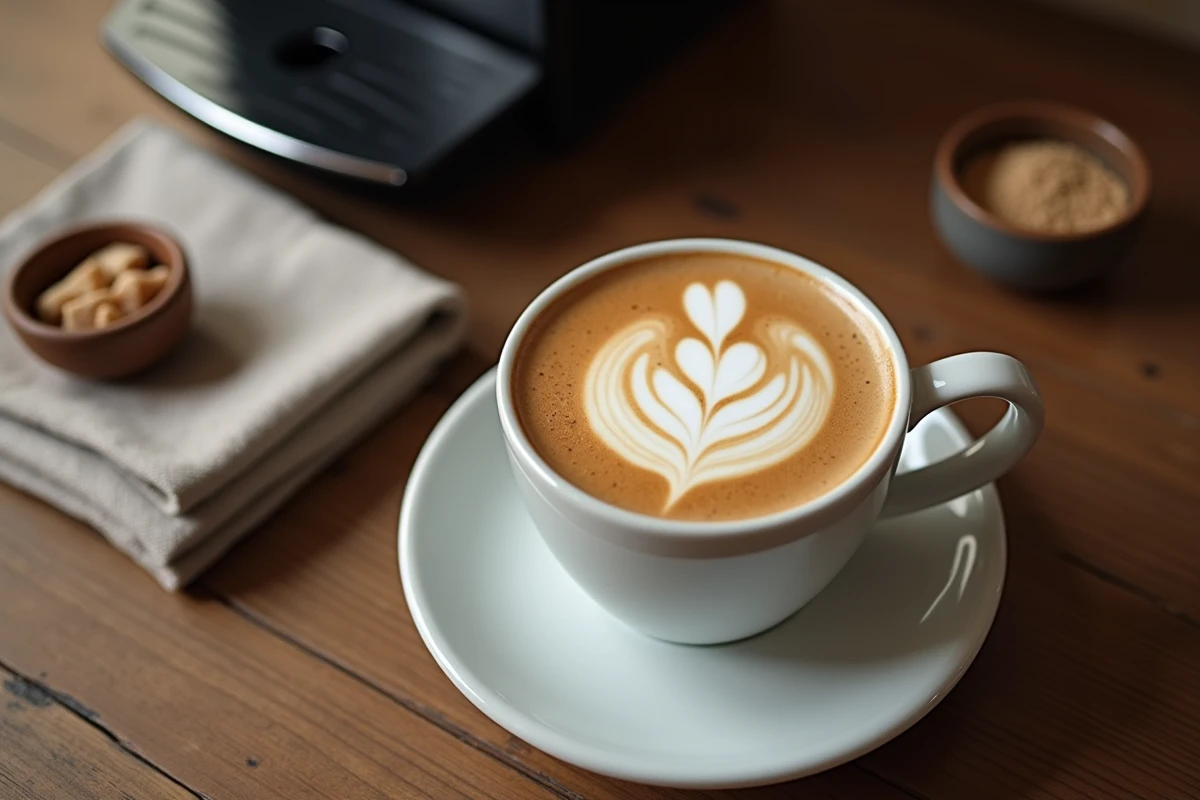
A cappuccino that gradually degrades on the Magnifica S is almost never a problem with the coffee or milk. The machine itself accumulates adjustment drifts and limescale that alter the result without the user being aware. Resetting the counters, both mechanically and electronically, is usually enough to restore the quality of the first weeks.