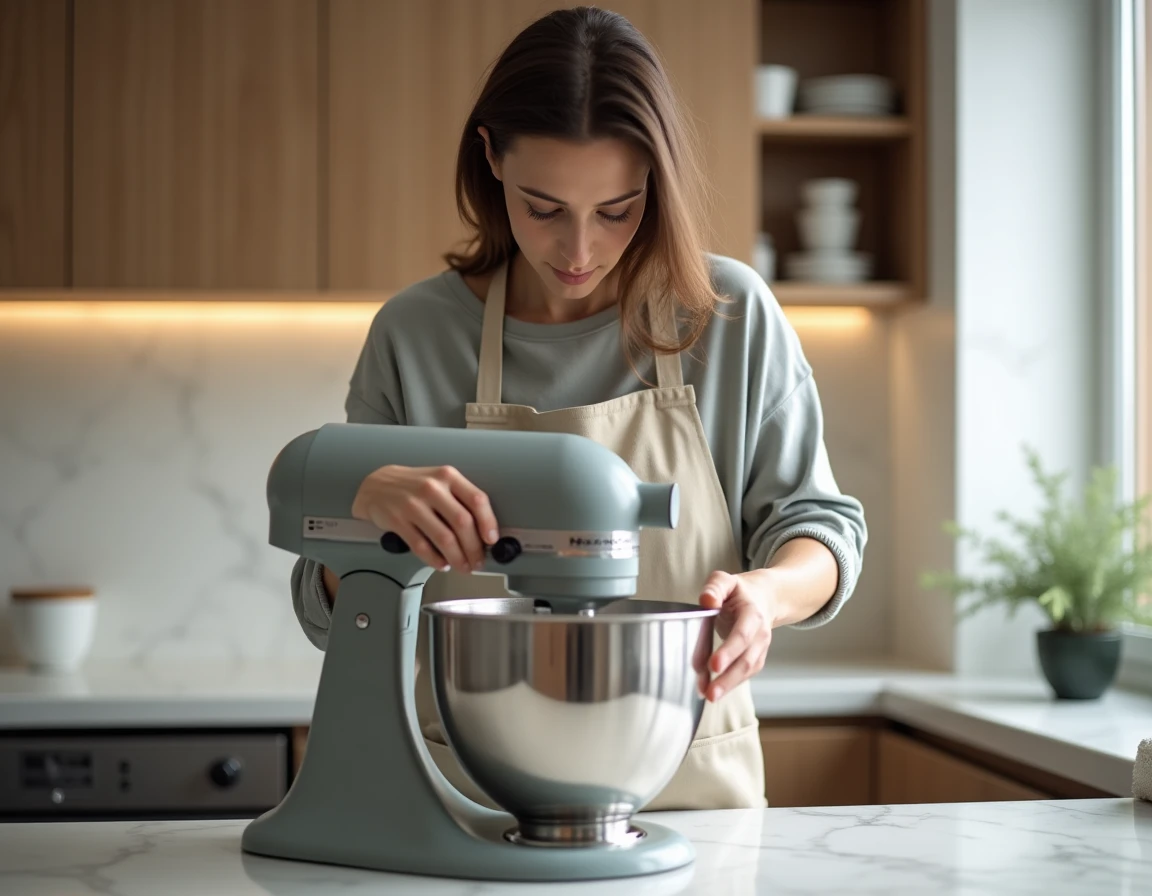
The bowl of a Kenwood stand mixer is secured by a bayonet system: a quarter turn locks the container onto the central axis of the base. When this mechanism gets stuck, the cause is rarely in the act of removal itself. The blockage almost always results from what happened during kneading, long before attempting to unlock anything.
Hydration and kneading speed: the real factors behind the Kenwood bowl blockage
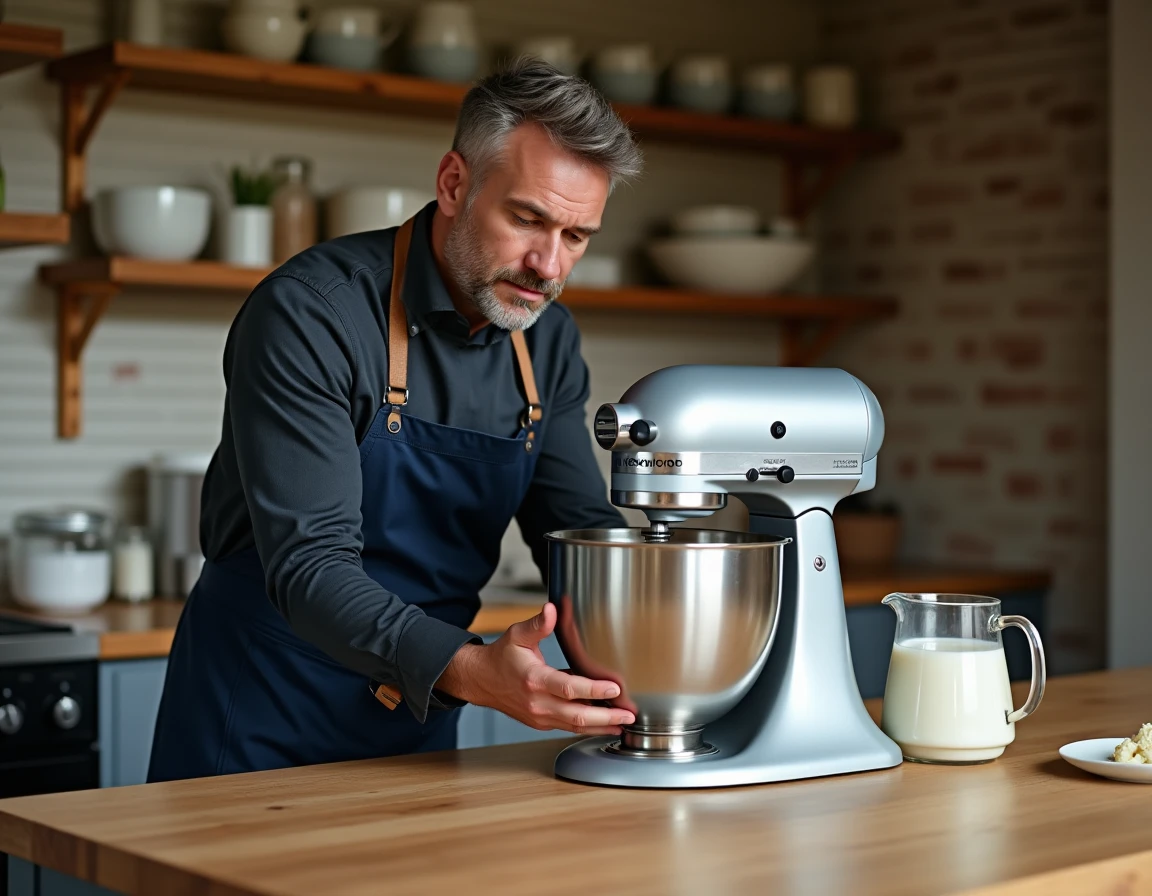
A bowl that refuses to turn after use has undergone excessive mechanical stress during preparation. Two parameters are responsible: the hydration level of the dough and the speed of the hook.
A dough that is too dry (bread, under-hydrated brioche, compact pizza dough) exerts considerable resistance on the kneading hook. This resistance is transmitted to the axis, then to the bowl’s locking system. The lateral pressure slightly deforms the fitting and creates a friction point that prevents reverse rotation.
The common reflex is to increase the speed when the dough seems not to form. However, Kenwood manuals (Chef Baker, Titanium Chef) recommend never exceeding speed 2 for kneading with the hook. Beyond that, centrifugal force presses the mass of dough against the walls, which amplifies the pressure on the locking mechanism.
For homemade bread recipes, maintaining a hydration level of at least half the weight of flour in water reduces mechanical tension. And limiting the kneading time to what the manual recommends protects both the motor and the locking system.
Those who wish to delve deeper into handling the bowl can remove the bowl from the Kenwood mixer with Gastronomie du Jour thanks to a step-by-step guide tailored to each type of fitting.
Kenwood bayonet mechanism: understanding the fitting before forcing
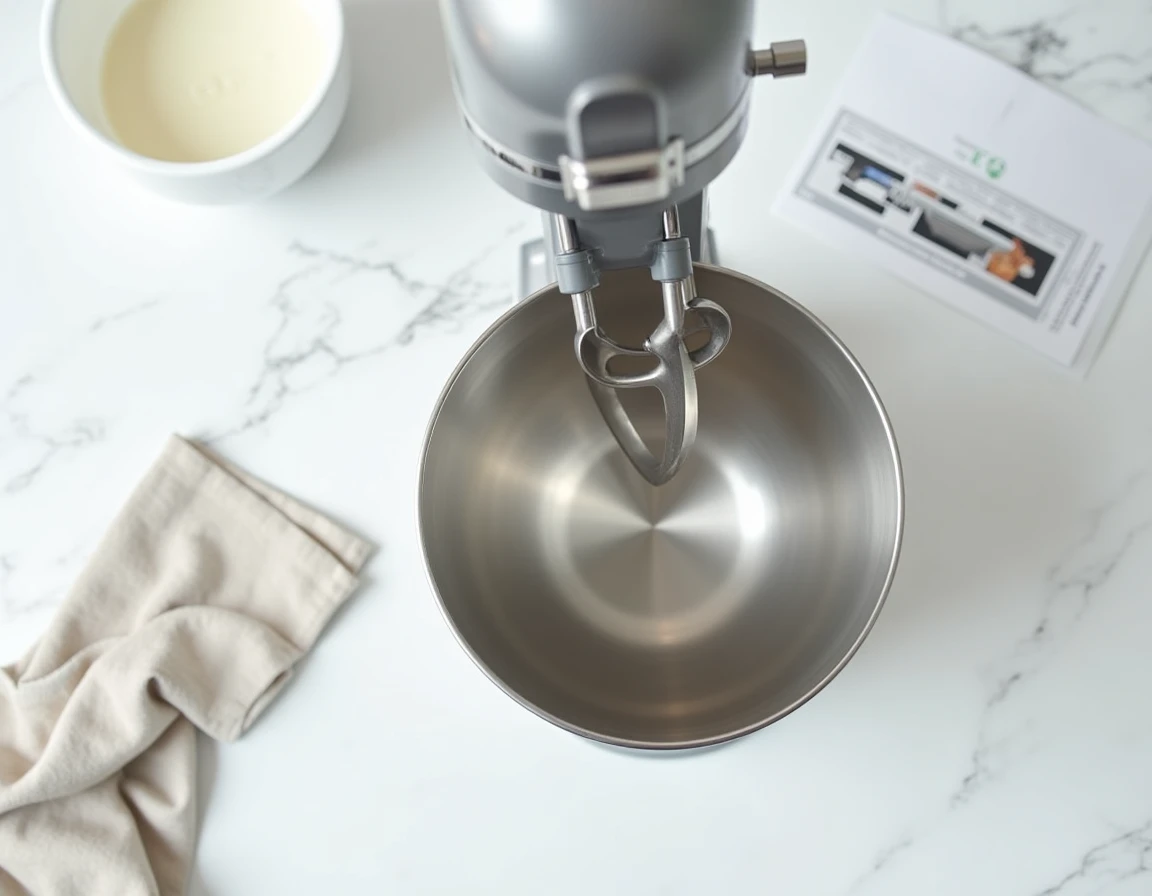
Kenwood mixers use two main families of fittings depending on the ranges. The Chef and Titanium Chef models operate with a counterclockwise locking mechanism: the bowl sits on the axis, then pivots a quarter turn to the left to lock in place. Removal is done in the opposite direction, to the right.
In the kMix and Prospero ranges, the principle remains that of the bayonet, but the diameter of the axis and the depth of the notches differ. A motion suited for the Titanium Chef may prove ineffective on a Prospero, as the necessary rotation travel is not the same.
The correct motion to unlock without damaging the axis
The Kenwood user manuals (kMix and Prospero+ 2022-2023 versions) describe a precise sequence:
- Press firmly down on the bowl before attempting any rotation to realign the notches of the bayonet
- Turn with a quick, short motion in the direction of unlocking, without continuous forcing
- If the bowl does not yield, apply a warm, damp cloth around the base for a few minutes to slightly expand the metal
This method is preferable to hammer blows or prolonged twisting, which risk damaging the central axis. A deformed axis makes the blockage permanent and requires a workshop visit.
Adapting recipes to never get the bowl stuck again
Resolving the issue downstream (unlocking) only makes sense if one also corrects what causes it upstream. A few adjustments in the preparation of doughs and creams are enough to eliminate almost all recurring blockages.
Bread and pizza doughs in the stand mixer
The flour absorbs water gradually. Pouring all the liquid at once into the bowl before starting the hook allows the dough to form evenly, without a dry phase where the motor struggles. Adding flour in thirds to the liquid (and not the other way around) reduces the initial resistance on the hook.
For pizza dough recipes, incorporating a spoonful of olive oil from the start lubricates the mass and reduces friction against the walls of the bowl. This detail changes the pressure exerted on the bayonet.
Butter creams and cake batters
Cold butter is another classic trap. Butter taken straight from the refrigerator and immediately beaten with a flat whisk generates violent mechanical jolts. Allowing the butter to come to room temperature before working with it protects the mechanism as well as the culinary result.
Maintenance of the Kenwood axis and bowl: preventing seizing
A bowl that regularly gets stuck despite correct settings indicates a maintenance issue. Dried dough residues that accumulate in the notches of the bayonet reduce the available rotation travel.
- Clean the notches of the base and the bowl’s base after each use, with a soft toothbrush and warm water
- Completely dry the metal parts before reassembling the bowl, as residual moisture promotes oxidation and seizing
- Apply a trace of food-grade petroleum jelly on the axis every two to three months to maintain smooth rotation
Workshop procedure sheets relayed by authorized Kenwood repairers confirm that the majority of customer service interventions related to a stuck bowl concern a dirty axis, not a defective part. Regular cleaning avoids workshop visits in most cases.
The last reflex to adopt: never store the mixer with the bowl locked in position. Leaving the bowl simply placed, without turning it into the locked position, prevents the bayonet from remaining under tension between uses. A bowl stored unlocked always removes effortlessly the next time.