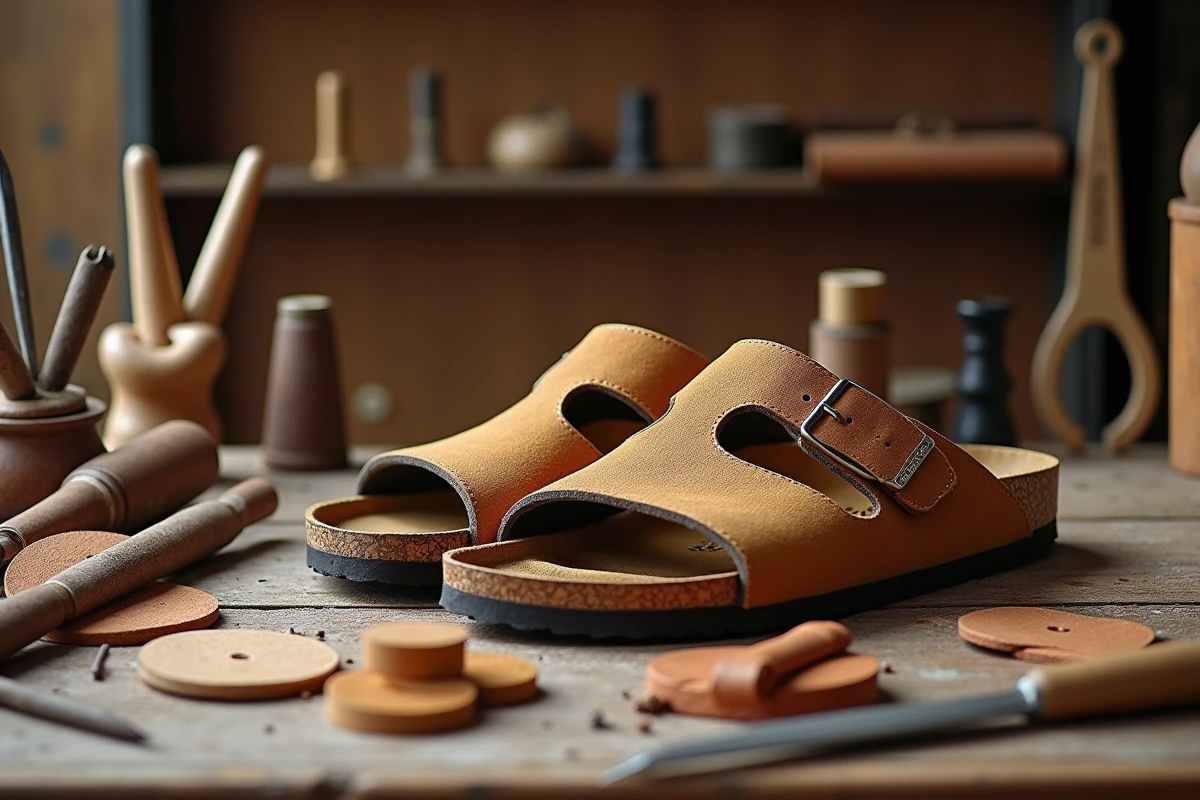
When you turn over a Birkenstock to look at the sole before heading to the checkout, the displayed price can be surprising. For a pair of Arizona or Boston sandals, it’s easy to exceed a hundred euros, sometimes much more for full-grain leather models. This pricing is not random or just a simple fashion effect: it reflects a combination of industrial, financial, and regulatory factors that few shoe brands accumulate at this level.
German manufacturing and the real cost of raw materials
Birkenstock maintains almost all of its production in Germany. We are talking about industrial sites where wages, overhead, and environmental standards weigh significantly more than in the Asian factories where most shoes sold in Europe are made.
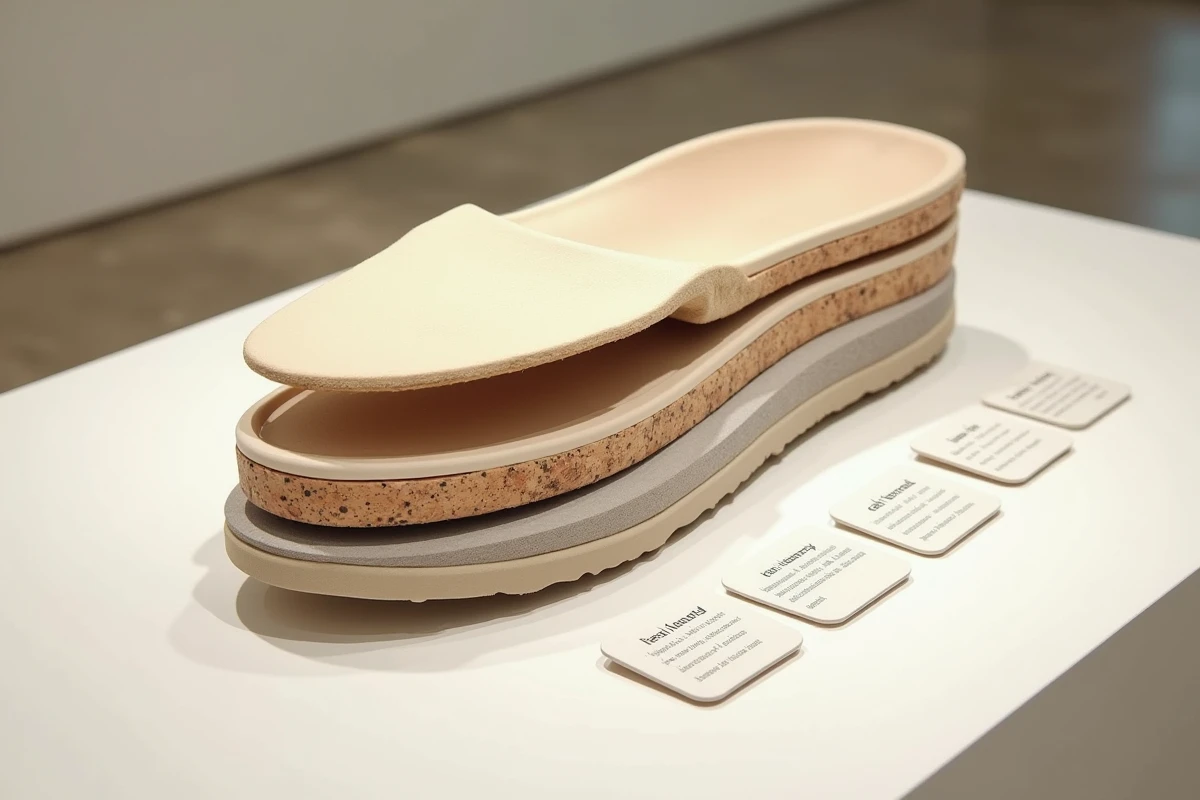
Cork, natural latex, and tanned leather form the foundation of each sole. These natural raw materials are more expensive to source and work with than synthetic foams or injected plastic soles. The footbed made of cork and latex is molded, not glued flat, which requires a specific manufacturing process involving pressing and baking steps.
By detailing this process, we understand better why Birkenstocks are so expensive: the choice of made in Germany combined with natural materials creates a cost floor that the brand does not seek to circumvent.

Customs duties and regulatory pressures on Birkenstock prices
Beyond cork and comfort, a financial factor weighs on the cost of each pair: customs duties directly increase the cost price.
In its regulatory documents filed in the United States, Birkenstock warned that the increase in certain customs duties could burden its cost of sales. The brand anticipates a contraction in its margins (gross margin, adjusted EBITDA margin, and net margin) for the 2026 fiscal year.
When trade tensions increase import taxes in key markets like the United States, the brand has two options: absorb the extra cost or pass it on to the selling price. With the current financial structure of the company, the second option prevails.
A post-IPO debt that locks in pricing strategy
Since its IPO, Birkenstock has carried significant debt. This financial burden forces the brand to defend its margins pair by pair. Lowering prices to gain volume would go against the logic of repaying this debt and maintaining market confidence.
The share buyback program further intensifies this pressure. Birkenstock has launched a substantial share buyback program. This type of operation requires high and consistent profitability, which mechanically translates into maintaining or even increasing retail prices.
- Rising customs duties in export markets, anticipated in official financial documents
- Post-IPO debt that imposes high margins to service the debt
- Massive share buyback that increases pressure on profitability per pair sold
Premium positioning and distribution control
Birkenstock’s upscale positioning is not new, but it has accelerated in recent years. The brand has gradually removed its products from discount channels to focus sales on its own stores, its website, and selected retailers.
This control of distribution has a direct effect on price. By limiting points of sale and reducing promotions, Birkenstock avoids price wars among retailers. Fewer sales channels mean less downward pressure on prices.
Collaborations with luxury brands and designers (we’ve seen co-signed models parading at prices three to four times higher than the standard catalog) reinforce the premium perception. This strategy of controlled scarcity elevates the entire range.
The impact of the Barbie movie and media visibility
When Margot Robbie wore a pair of pink Arizona sandals in the Barbie movie, demand skyrocketed. This type of exposure costs nothing in direct advertising but fuels a virtuous cycle for the brand: more desirability, less need to slash prices.
Feedback varies on this point, but several retailers note that classic models (Arizona, Boston) have seen their prices increase after these visibility peaks, without sales volumes declining.
Durability and the real cost of using a pair of Birkenstocks
One argument often raised by regular buyers is that a well-maintained Birkenstock lasts for several years. The cork sole can be resoled, the buckles replaced, and the leather upper nourished. This reparability changes the calculation.
When spread over the number of seasons of use, the cost per wear drops significantly below that of a synthetic sandal bought cheaper but replaced every summer. The brand actually relies on this argument to justify its prices to hesitant consumers.
- Cork and latex sole replaceable by a cobbler or through the brand’s after-sales service
- Natural leather that patinas and adapts to the shape of the foot over time
- Buckles and straps available as spare parts on certain models
The true cost of a Birkenstock is measured over three to five summers, not just a single purchase. This durability logic, combined with the industrial and financial constraints described above, explains why the checkout ticket remains high and shows no signs of decline. For the German brand, each pair sold must finance both costly European production, a publicly traded corporate debt, and a carefully protected brand image.