
Lending your electronic cigarette may seem trivial, a gesture of friendliness among friends or colleagues. The issue goes beyond a question of oral hygiene: sharing a vaping device involves regulatory, health, and technical dimensions that most vapers underestimate. This article assesses the concrete risks associated with lending an e-cigarette, based on French regulations and available data on nicotine exposure.
Risks of sharing an electronic cigarette: what the data shows
| Type of risk | Individual use | Sharing the device |
|---|---|---|
| Nicotine exposure | Dosage chosen by the user | Inappropriate dosage for the second user |
| Hygiene (mouthpiece) | Contact with a single user | Possible transmission of oral secretions |
| Legal risk (minor) | None if the buyer is of legal age | Violation of the Public Health Code if the recipient is under 18 |
| Control of the equipment | Maintenance and adjustments managed | Handling by someone unfamiliar with the device |
This table summarizes the differences between normal use and occasional sharing. The most underestimated point remains exposure to a nicotine dose calibrated for someone else. An e-liquid dosed for a former regular smoker can cause nausea, dizziness, headaches, or palpitations in a non-smoker.
When a disposable puff is shared, the problem worsens: these devices do not allow for air flow adjustment or modification of nicotine concentration. The second user inhales exactly the same aerosol, with no possibility for adaptation.

Nicotine and shared vaping: why dosage matters so much
The nicotine contained in an e-liquid is dosed according to the vaper’s profile. A former heavy smoker can use a concentrated liquid without notable adverse effects, while a person unaccustomed to this substance will experience symptoms from the very first puffs.
Symptoms of inappropriate nicotine exposure
- Nausea and dizziness, sometimes from the first inhalation, in someone who does not usually vape
- Persistent headaches related to the vasoconstrictive effect of nicotine on a non-tolerant body
- Heart palpitations, especially if the occasional user takes several puffs due to social mimicry
Regular vapers have developed a tolerance to nicotine that those to whom they might lend their equipment do not possess.
Sharing thus creates an asymmetry of exposure. It is not comparable to sharing a glass of water: the inhaled content produces a pharmacological effect that varies according to the recipient.
Lending an e-cigarette to a minor: what the Public Health Code says
Article L.3513-5 of the Public Health Code prohibits the sale, distribution, or free offering of vaping products to those under 18. This prohibition applies even when the device or liquid does not contain nicotine.
Lending your electronic cigarette to a teenager can therefore be equated to a free offer of a vaping product to a minor, which constitutes an offense. The gesture does not need to involve a financial transaction to fall under the law.
This legal dimension is rarely mentioned in discussions among vapers. Confusion often arises from the fact that lending is perceived as temporary, while the regulation targets the act of making available, regardless of its duration.
Nicotine-free products: same prohibition
One point of French regulation deserves to be highlighted: the prohibition also covers nicotine-free devices. A vaper who lends an electronic cigarette containing a fruity liquid with zero milligrams of nicotine to a minor remains in violation. The law does not distinguish the content of the device; it targets the vaping product as a whole.
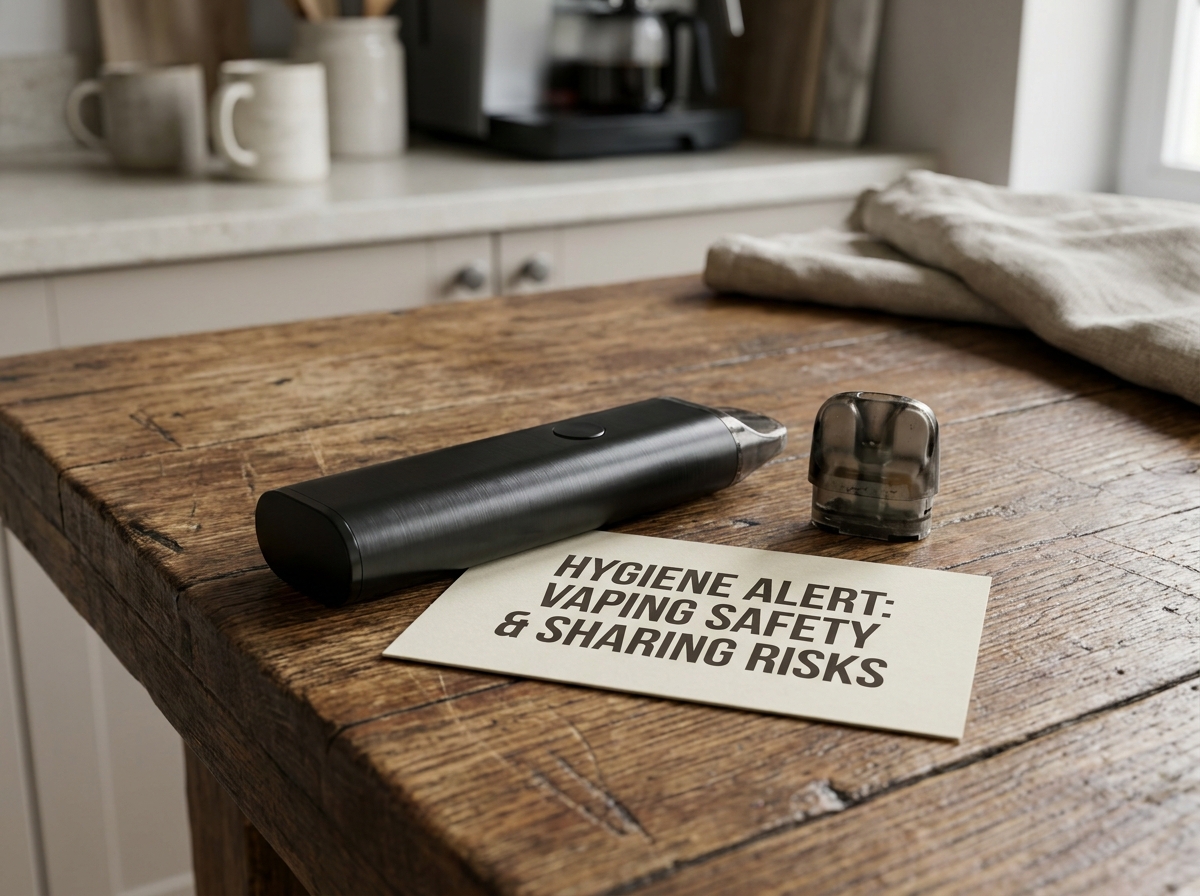
Mouthpiece hygiene and cleaning limitations
The most common objection to the risks of sharing is simple: just wipe the mouthpiece. This precaution reduces contact with visible secretions, but it does not solve everything.
The mouthpiece (drip tip) is in direct contact with the mouth. A quick wipe removes saliva from the surface. However, the secretions present in the internal areas of the device are not accessible with a simple tissue wipe. The airflow channel, vaporization chamber, and seals retain organic residues.
- Replacing the mouthpiece with a personal one is the only measure that eliminates direct oral contact
- Wiping the mouthpiece reduces the risk of surface transmission but does not eliminate internal residues
- The safest recommendation remains not to share the device at all, according to specialized maintenance guides
The comparison with sharing a glass or a bottle is tempting, but an electronic cigarette involves active inhalation. The user draws air through an internal circuit, which increases contact with residues compared to simple lip contact.
Battery safety when a third party handles the device
Lending your vape equipment also exposes you to a technical risk. Modern electronic cigarettes use lithium-ion batteries, which require a minimum level of familiarity for handling. An occasional user may press the activation button too long, causing overheating, or attempt to charge the device with an unsuitable cable.
On models with removable batteries, the risk is more pronounced. A poorly inserted battery or one with damaged insulation can cause a short circuit. The regular owner knows the condition of their batteries, a borrower does not.
This risk remains marginal with devices that have built-in batteries, which have electronic protections (automatic shut-off, short-circuit detection). It becomes more concrete with mechanical mods, which lack any electronic protection and are still used by some experienced vapers.
Lending an electronic cigarette simultaneously engages the health of the recipient, the legal responsibility of the lender, and the integrity of the equipment. None of these three aspects can be resolved by wiping the mouthpiece on a pair of jeans. The most reliable measure remains the most straightforward: keep your device to yourself.