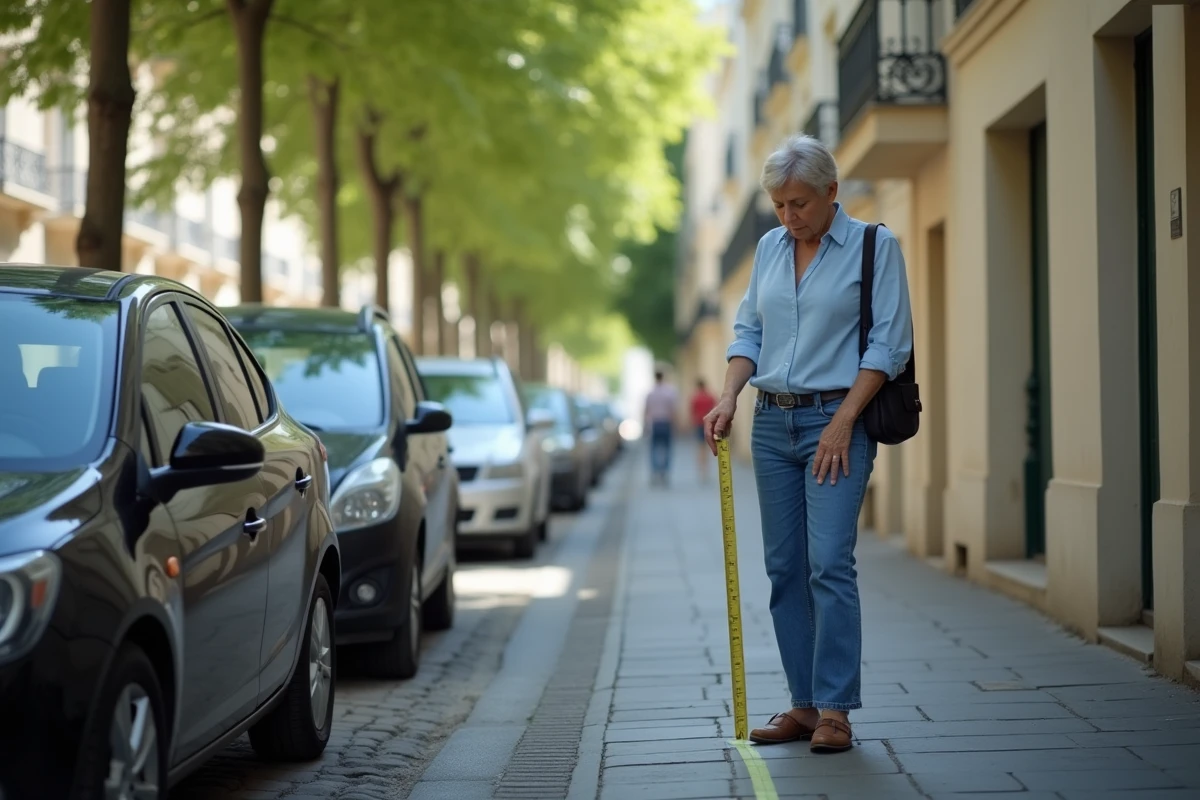
Parking within five meters of an intersection exposes you to a second-class fine, even if there is no road marking. The minimum distance between two vehicles is not explicitly stated in the Highway Code, contrary to what many drivers believe. The lack of an explicit indication on this point fuels various and sometimes risky practices.
Some municipalities, however, impose additional rules, often unknown, that can lead to immediate fines. Insurance companies, for their part, often consider non-compliance with distance regulations during parking as an aggravating circumstance in the event of a claim.
Parking safely: why the distance between two cars makes all the difference
Parking is not a trivial act. Maintaining a reasonable space between two vehicles helps avoid turning every maneuver into a game of automotive mikado. Parking too close to another car increases the risk of bumps, scratches, crumpled bumpers, and escalates minor tensions between drivers. Compact city centers do not help: here, every centimeter gained often comes at a high price.
The parking distance rule between 2 cars is based on a clear principle: allowing everyone to maneuver and depart safely. In the absence of a written guideline in the law, the recommendation from professionals remains clear: allow at least 70 centimeters in front and behind your vehicle, especially for parallel parking. This margin, often overlooked in haste, prevents a succession of avoidable incidents, from a dented wing to an insurance claim.
Maintaining a minimum distance between two vehicles also limits neighborhood conflicts, smooths access to tight parking spaces, and spares law enforcement some headaches. A sufficient space is the key to hassle-free parking, whether it’s late at night or in a poorly lit alley. Experienced drivers know this: those who leave room sleep peacefully and drive without attracting unnecessary trouble.
What the Highway Code says about minimum distances to respect
The Highway Code does not specify a mandatory minimum distance for parking between two cars. However, it strictly regulates parking rules to ensure safety and traffic flow. Article R417-10 establishes a simple rule: each vehicle must allow others to circulate or exit their parking space without risky or obstructive maneuvers. In practice, road markings delineate these spaces, especially in crowded cities and parking lots.
The safety distance to be respected varies depending on the type of parking: parallel, angled, or bay. In driving schools, the range of 70 centimeters to one meter in front and behind is often emphasized to ensure each driver can depart without incident. This guideline, which frequently comes up during the driving theory test or during a roadside check, quickly becomes a reflex for those wanting to avoid bumps.
The absence of a precise figure in the law places the responsibility on the driver. They must anticipate difficulties and adjust their behavior, especially in unmarked spaces. On the road, when spaces lack road markings, caution is paramount. The regulations of the Highway Code in France primarily protect users, defuse conflicts, and limit the risk of fines for obstructive parking.

Risks, fines, and tips to avoid unpleasant surprises while parking
Forgetting the minimum distance between two cars while parking is taking the risk of more than just a minor inconvenience. An obstructive or dangerous parking situation, whether on public roads or in a regulated area, can quickly become costly. A tight parallel park, a car too close to another: a collision is never far away, and neither is the towing. Depending on the severity, the Highway Code provides for a fixed fine of €35 for obstructive parking, which rises to €135 for dangerous parking, such as on a pedestrian crossing, a sidewalk, or in front of an entrance.
The consequences do not stop there. In the event of a bump, even a minor one, the insurance bonus can vanish. A poorly parked car, too close to another vehicle, can also obstruct visibility or access to a door, a boat, a delivery area, or a reserved space, which quickly attracts the attention of law enforcement. Parking spaces for electric vehicles, especially in transforming or construction areas, are closely monitored.
To limit unpleasant surprises, adopt these few wise reflexes:
- Always respect road markings and traffic signs.
- Always leave enough space for each driver to maneuver without the risk of contact.
- Consider necessary access for garages, carriage doors, and delivery areas.
- Before turning off the engine, take a look at the immediate surroundings, whether you are in the city or in a residential area.
A driver attentive to road safety and the rigor of their parking can avoid many hassles. On the street or in a parking lot, it’s often the detail that changes everything: a simple gesture, a habit to adopt, and the road becomes a little more pleasant for everyone.