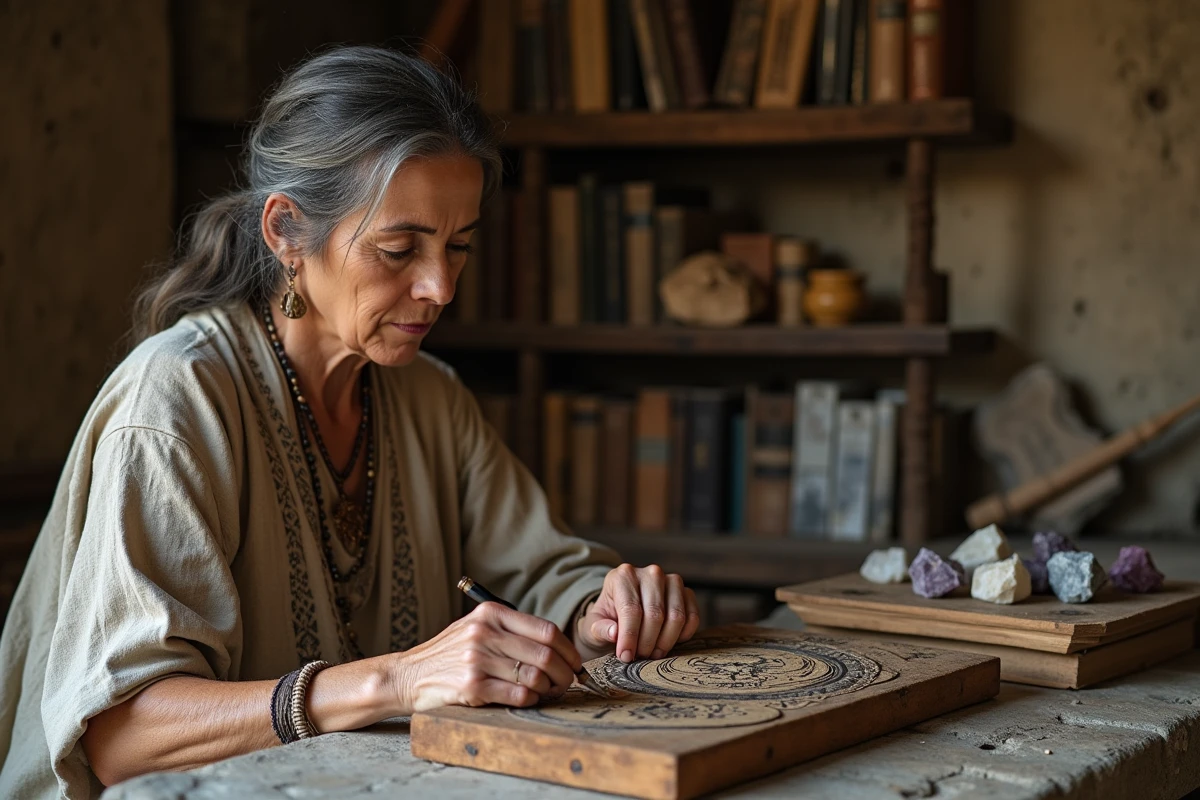
Some motifs traverse cultures without ever anchoring in a unique tradition or conforming to a single narrative. The lemurian symbol, regularly attributed to a lost civilization whose existence remains a subject of debate, illustrates this conceptual mobility.
Researchers observe that its interpretations fluctuate according to the eras and spiritual currents, while retaining an aura of ambiguity. This plasticity has allowed it to acquire a unique scope, oscillating between esotericism, identity quest, and historical speculation.
Lemuria: between founding myth and spiritual heritage
On the island of Mauritius, the lemurian symbol is not limited to an ancient tale or a local invention. It plunges its roots into the troubled relief of the Mauritian mountains and the mountain ranges in the center of the island, where Trou aux Cerfs stands out as a landmark. In the 19th century, Jules Hermann envisioned a worldview that embraces both science, poetry, and popular beliefs, establishing Lemuria as a mythical foundation of the Indian Ocean. The stone, omnipresent, then becomes a custodian of a supposed memory, while the figure of the rock-god fuels a questioning of our mysterious origins.Writers like Malcolm de Chazal continue this work, particularly in Petrusmok. Chazal connects the Mauritian landscapes to a diffuse spirituality, influenced by Europe, Hindu texts, and Madagascar. In his work, the search for hidden meanings gives the symbol a universal dimension. The mountains, the rocks, the rituals: everything converges towards a question about filiation and transmission according to Chazal. The meaning of the lemurian symbol reveals itself through these intersections. It questions the intertwining of the visible and the invisible, of history and myth. Between Port Louis, the peaks of Curepipe, and the collective imagination, this sign traces the thread of a shifting identity, blending memory, the sacred, and literary creation.
What mysteries surround the lemurian symbol and its hidden meanings?
Behind the lemurian symbol, the hidden meanings intrigue and are transmitted, crossing generations and schools of thought. In Mauritius, history intertwines with the tales of the Rosicrucians and Freemasonry, up to the intuitions of Robert Edward Hart or Van der Leeuw. The mountains, true stone sentinels, harbor places with evocative toponymy: Saint Denis Mountain, Pouce, Temple. These names are inscribed in the collective memory. Together, they draw a secret map where each summit seems to open a breach into the invisible.The diffusion of the lemurian narrative continues in literature, carried by Chazal, the influence of Rudolf Steiner, or the symbolic correspondences between Curepipe and Paris. The appearance of the cross on certain massifs, the allusions to the King of the World and Pierre Flandre, weave a network connecting island and continent, Eastern and Western spirituality.
To better grasp the extent of these influences, here are some notable elements:
- Contributions from Rome and France irrigate these stories.
- The imprint of the Rosicrucians intertwines with Mauritian traditions.
- The enigma remains: the meaning of the lemurian symbol remains fluid, reinventing itself at the pace of eras and intellectual debates.
In this geography of mystery, each reference, each mention in a text, revives the power of a sign that cannot be confined. It continues to question: what hidden forces, what invisible legacies does the lemurian symbol silently convey?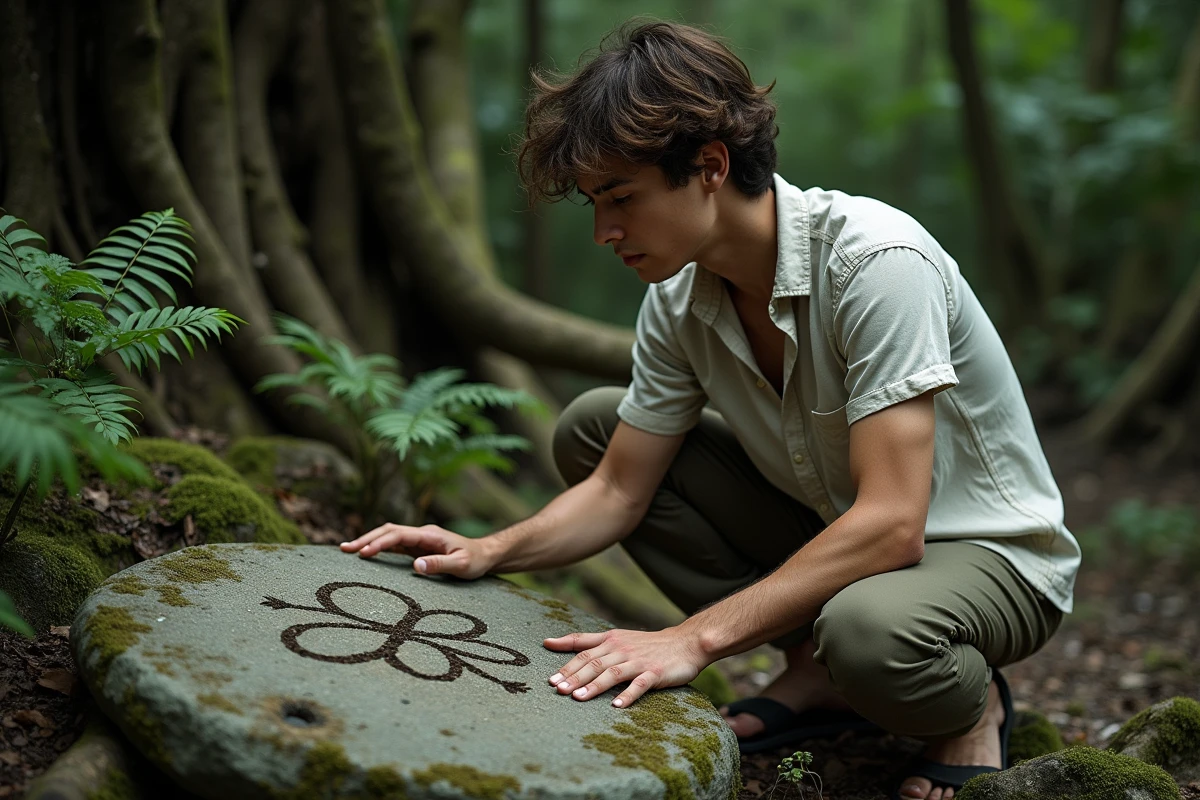
Crossed perspectives: the lemurian symbol against other great spiritual emblems
Over time, the lemurian symbol has managed to occupy a special place among the world’s spiritual emblems. In comparison to the flower of life, the merkaba, or the Metatron’s cube, it does not attract attention through perfect geometry but through the strength of its narratives, rooted in the mountains of Mauritius and the writings of Chazal. Where the eye of Horus evokes divine vigilance, the lemurian mark speaks of memory, ancestors, and secrets transmitted quietly.The Chazalian texts and fragments of Blavatsky remind us of the universal significance of these symbols, but the mythical novel Petrusmok anchors the lemurian sign in a very specific territory: massifs of Trou-aux-Cerfs, sacred mountains, rocks standing as witnesses of another time. In this setting, the lemurian mark cultivates ambiguity, hesitating between sacred beacon and enigma for the mind.
| Symbol | Origin | Function |
|---|---|---|
| Lemurian Symbol | Mauritius, Chazal, mountains | Transmission, memory, secret |
| Flower of Life | Egypt, Europe | Harmony, creation, unity |
| Merkaba | Hebrew tradition | Protection, elevation |
The dialogue between these symbols proves fruitful. Among the Dogon people of Mali, with the nommos and the cosmogony of Sirius, we find correspondences, testifying to the circulation of myths from Europe to Mauritius, from Paris to the shores of the Indian Ocean. Each emblem carries within it a story, a territory, a promise of meaning. But the lemurian symbol, it never fully reveals itself. It continues to challenge curiosity, like a vestige that refuses to fade into oblivion, ready to resurface whenever a gaze lingers on the stones or the pages of a narrative.